Language learning apps reviewed: 8 apps for your target language

Eight language learning apps are on my phone, and each has a different character. Duolingo plays with you, Babbel teaches you, Anki lets you decide for yourself. Honestly, there is no test winner here. There is only the app that fits your everyday life.

The apps I compared

Anki App Icon

Anki

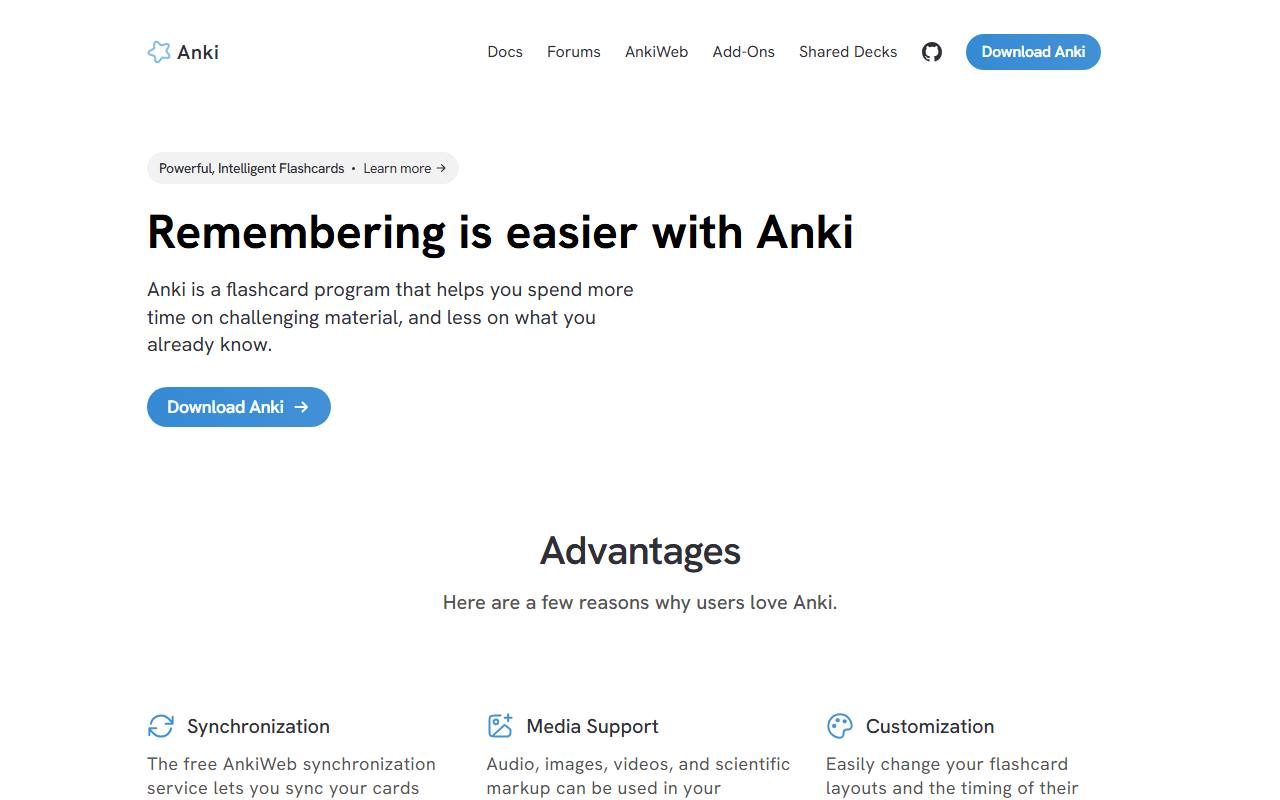
Anki is a flashcard program with a spaced repetition algorithm (SM2/FSRS) that started as an open-source project in 2006.

Babbel Logo

Babbel

Probably the best-known language learning app in Germany places great emphasis on grammar and sentence structure and offers courses organized by topics such as travel, business or everyday …

Busuu icon

Busuu

Busuu combines traditional language courses with a community feature that allows users to have exercises checked by native speakers.

Duolingo app

Duolingo

Duolingo is a popular language learning app that was founded in 2012 and has millions of users worldwide.

italki App Logo

italki

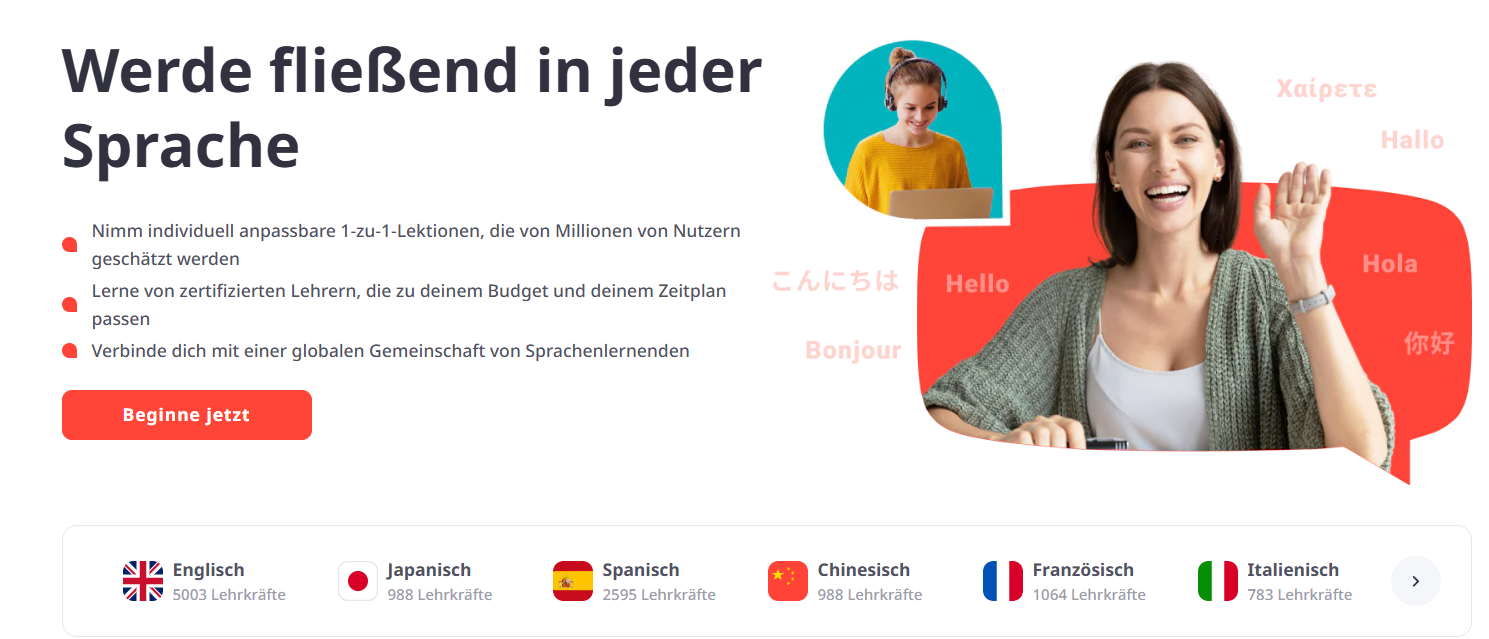
italki is an e-learning platform that offers online language courses. italki was initially founded in 2006 as a social network for language learners.

Memrise icon

Memrise

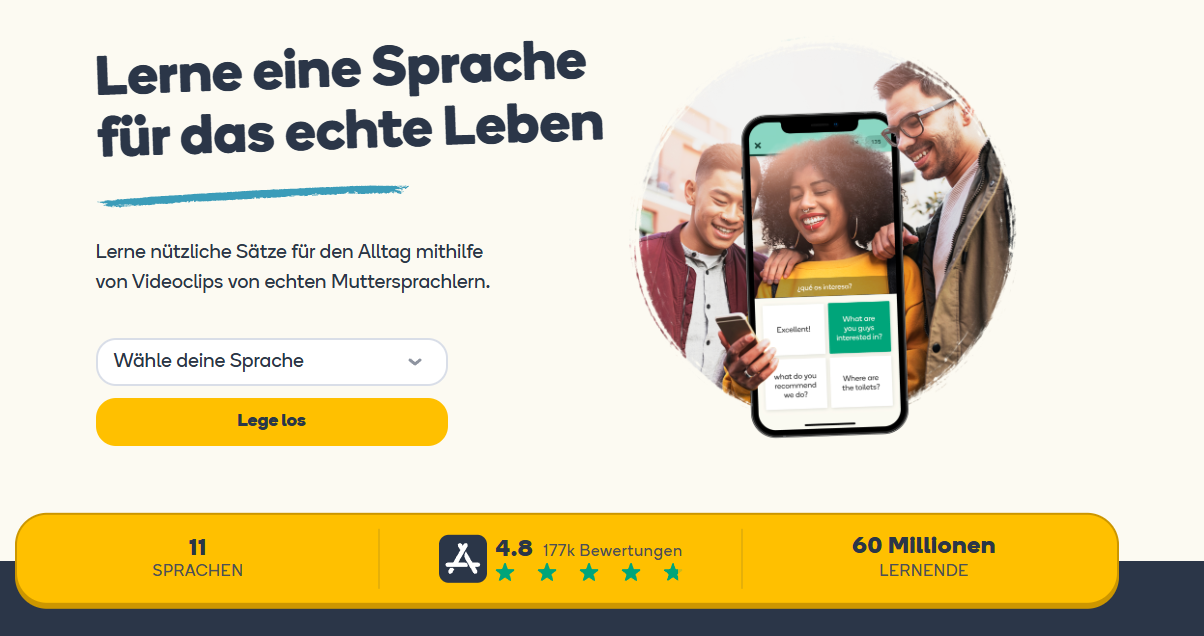
Memrise scores with a unique mix of playful exercises and practical learning units. With real dialogues and a user-friendly interface, language learning becomes an enjoyable routine.

Mosalingua Icon

Mosalingua

Mosalingua focuses on fast vocabulary learning and uses the Spaced Repetition System (SRS). There are different Mosalingua apps in the Playstore, depending on the language to be learned.

Tandem App Icon

Tandem

Tandem is a language learning app that allows you to speak directly with native speakers from around the world and learn from them.

Babbel

Babbel website review

A Babbel lesson feels more adult than a round of Duolingo. You listen to a dialogue, sort words, write sentences, and speak them out loud. There are no fanfares and no owl scolding you. A unit takes me a good ten minutes. I find this calmer tone pleasant, others find it boring.

The strongest moment comes at the end of each lesson. Babbel explains the grammar to you in the exact sentence you just got wrong. These explanations are in German and relate to your native language. If you're struggling with the subjunctive in Spanish, you don't get an English mnemonic. You get a German comparison. After a few days, the review system picks you up again on those exact words.

In everyday life, the offline mode helps more than I expected. I download two lessons before a train ride and get through without a network. The two competitors handle this more poorly. I've been using Babbel Speak regularly since its beta launch. You speak freely about a topic, the AI doesn't interrupt you. The feedback comes all at once afterward. The recognition isn't perfect; it sometimes misinterprets my mumbling mode.

What bothers me is the language selection. Japanese, Chinese, Korean, and Arabic are completely missing. The course depth also only goes up to B1 or B2 depending on the language. That's enough for everyday life, but not for studying abroad. If you want to go further or to Asia, you're better off with Busuu.

What Babbel really costs per year

Babbel sells subscription durations instead of classic monthly subscriptions. In the German App Store, there are currently three durations. One month costs €18.99, three months €47.99, one year €95.99. Each of these applies to a single language. If you want all 14 languages, the annual subscription costs €107.99. Honestly, that's the only option I find worthwhile. A twelve-euro surcharge for thirteen additional languages is a joke. On the Babbel website itself, prices are often lower than in the store because there's no Apple fee added. So compare both options before purchasing.

What to expect in daily life:

  • Grammar explained in German instead of English
  • Offline lessons work reliably without a network
  • Babbel Speak lets you speak freely
  • No Japanese, Chinese, Korean, or Arabic

italki

italki website in review

The first hurdle with italki is the selection. You scroll through profiles, watch introduction videos, and read reviews. The filters help: language, price per hour, availability, and the teacher's origin. I needed almost an hour for that the first time. The trick: Book two or three cheap trial lessons with different people. After that, you know very well who suits you.

A lesson then runs via video call, mostly over the italki Classroom. Good teachers send material beforehand and write notes in the chat during the conversation. At the end, you have a list of mistakes and new vocabulary. Weaker tutors chat for 45 minutes and send nothing. Rescheduling an appointment in the calendar is hassle-free. That's exactly where the difference lies between a tutor and a trained teacher.

What surprised me at first: The calendar forces you to make a decision. An appointment is set, and you can't swipe it away like a push notification. For my discipline, that was the biggest lever. A fixed appointment is half the battle for me. With Tandem, on the other hand, I often let appointments slide.

The italki Plus subscription runs alongside and costs extra. After the lesson, you get an AI summary, flashcards, and exercises on the material. An AI role-play repeats the situation from your last lesson. The language test in the annual plan at least showed me an honest level. Honestly, I mainly use the summary; the rest gathers dust.

What an hour with italki costs

With italki, you don't pay for the app, but for lessons. Each teacher sets their own hourly rate. According to the German app description, community tutors start at under five euros per session. Qualified teachers start at under ten euros. Trial lessons are also under five euros and can usually only be booked once. The range is open-ended; experience and demand drive the price. Separately, there is the subscription italki Plus with AI features. It costs 6,99 € per month or 69,99 € per year in the German App Store. On the website, italki states 5,99 US dollars per month. Lesson hours are not included – that's the most important footnote.

Prices at italki at a glance:

  • Community tutors start at under five euros per session
  • Qualified teachers start at under ten euros
  • Trial lessons cost under five euros
  • italki Plus: €6.99 per month or €69.99 per year
  • Plus does not include any lessons

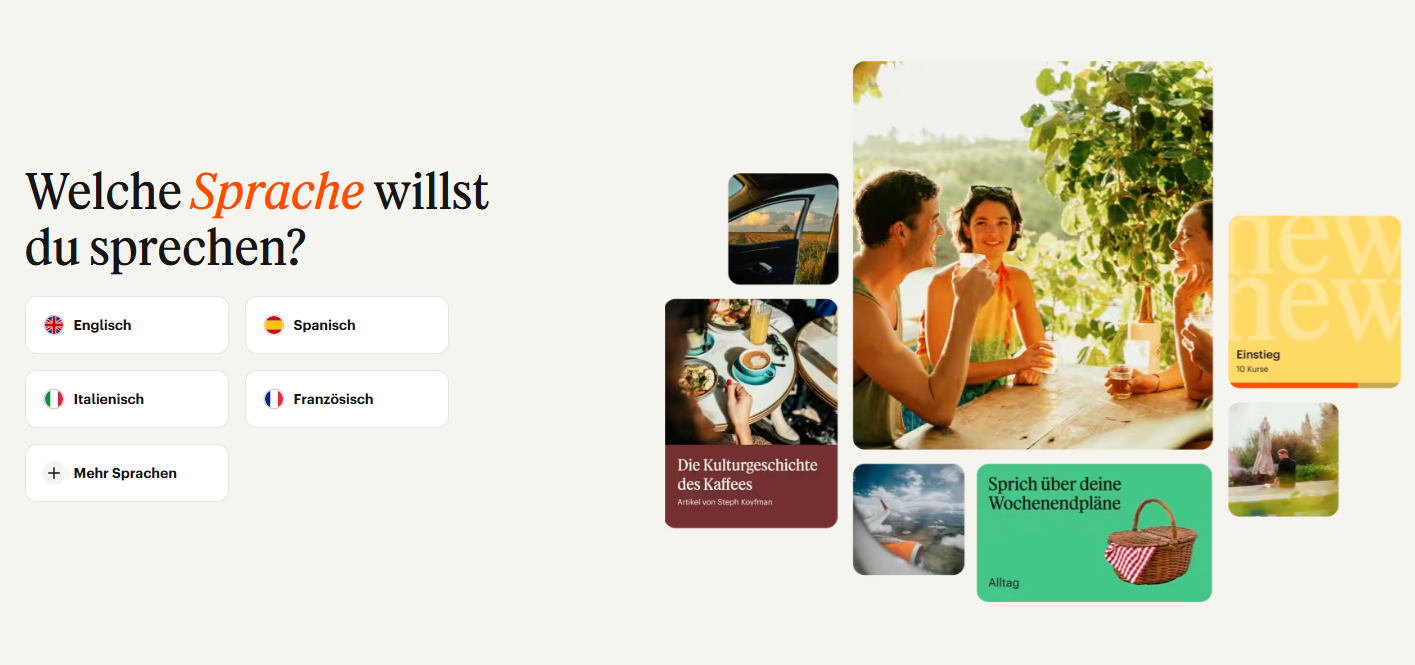
Duolingo

Duolingo website review

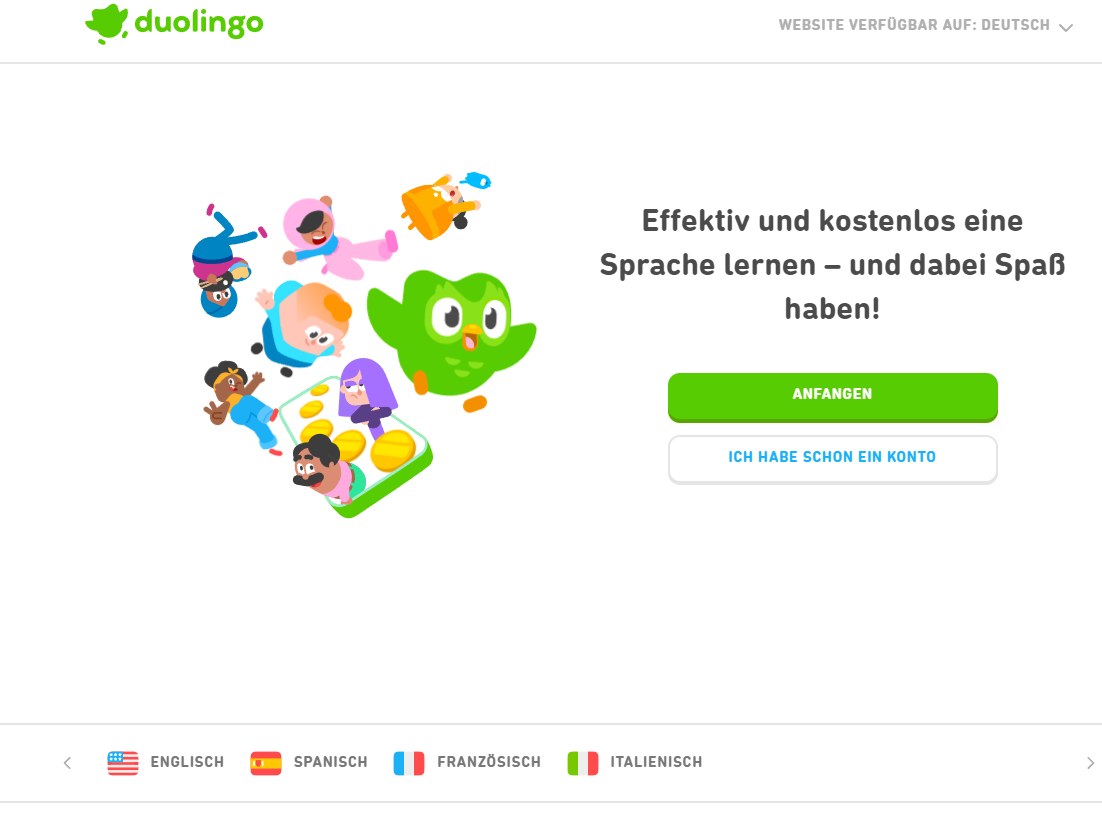
A lesson rarely lasts longer than four minutes for me. You tap words, arrange sentence building blocks, and repeat a sentence. Then comes the fanfare, a few points, and the next bubble on the learning path. The streak counter at the top right does the rest. This exact rhythm is why I haven't quit for years. It's also why I sometimes do a lesson at midnight.

In everyday life, you quickly notice where the limit lies. After three mistakes in a row, your energy is down. Then you watch an ad, pay with gems, or wait until tomorrow. I have often experienced this as a signal to stop. At that exact moment, I would have liked to continue learning. Instead of practice, you get a purchase prompt.

The second limit is content-related. Duolingo trains you excellently in recognizing words. That only helps you to a limited extent when speaking freely on vacation. The practice sentences are deliberately quirky, which is fun. They have little to do with ordering in a restaurant. The app only briefly explains grammar, usually only after a mistake. If you really want to have conversations, you need something additional.

The app is now officially called Duolingo: Languages and Chess. Math and Music are also included. I like the variety, but sometimes lose track because of it. The learning path seems fuller without your language progressing. My tip: Hide the additional courses and stick to one language. If you want to work more structured, check out the other language learning apps.

What Duolingo costs you per year

Duolingo thrives on you starting for free. All language courses are free, according to the provider. For this, you see ads and run into the energy limit. Super Duolingo removes both. In the German App Store, two annual prices are stored: €89.99 and €110.99. Which one you see depends on the offer Duolingo presents to you. There is a family plan for up to six accounts, bookable only annually. At the top is Duolingo Max with AI video calls. I could not find a reliable euro price for Max in Germany. That's why I am not listing one here. Check it directly in the app, where you'll see your personal offer.

What to expect:

  • Lessons rarely last longer than five minutes
  • Energy runs out after a few errors
  • You hardly practice free speaking here
  • Super costs €89.99 or €110.99 per year

Tandem

Tandem Website Review

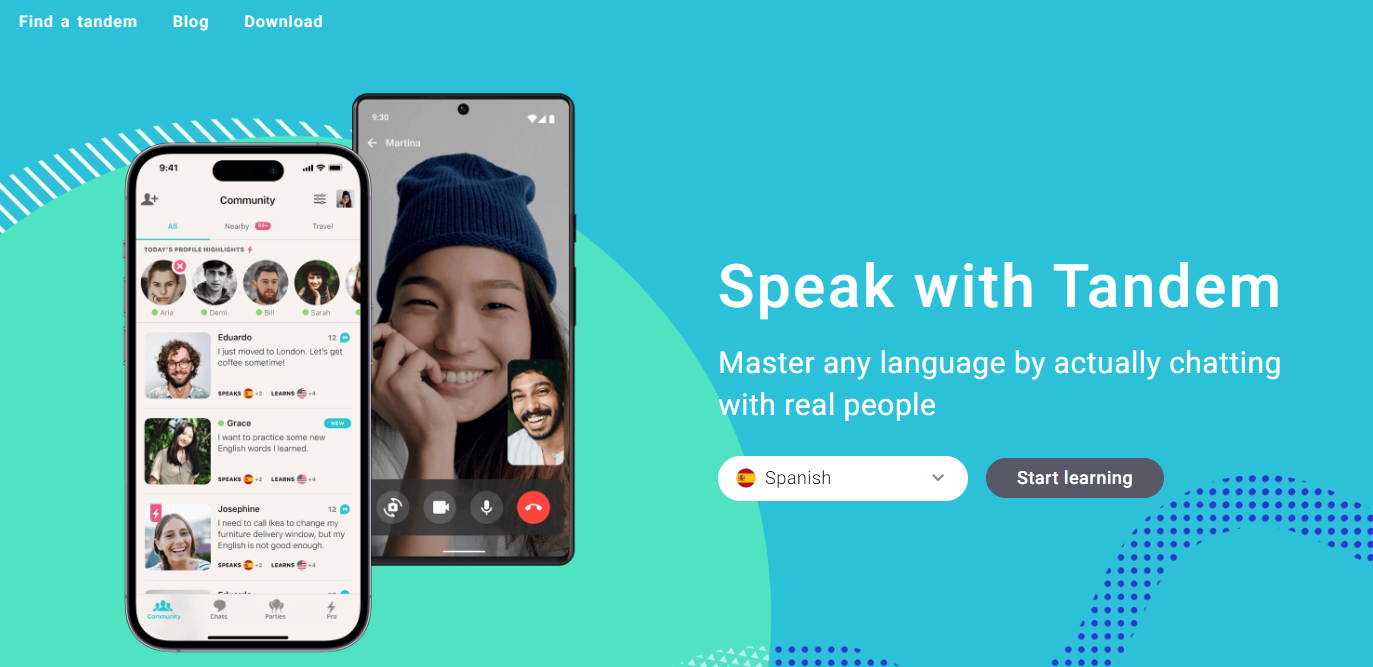
The first day on Tandem feels like moving to a foreign city. You create your profile and describe what you like. Then messages come, sometimes many. The selection is huge, over ten million downloads in the Play Store. If you have a German profile, you're in demand on the platform.

From my experience, the first message decides everything. A brief hello leads to a brief hello back. If you ask a specific question about the profile, a real conversation develops. I usually write in a mix of German and target language, which lowers the barrier. Voice messages work better for me than text because pronunciation gets practiced along the way.

In the chat, the AI toolkit sits right next to the input field. Grammar Check cleans up your draft, Word Finder supplies the missing word. Rewrite rephrases, Explain Corrections explains your partner's correction to you. You get three translations per day for free, then that's it. You notice that on the second evening. Language Parties run alongside as open audio rooms, free for 60 minutes a day. There you listen without having to speak yourself.

The sore point remains reliability. Some partners reply for three days, then never again. Others are clearly not looking for language training but a date. Both explain the 3.8 stars in the Play Store for me. Tandem Pro at least solves the translation limit. If you need fixed appointments and a curriculum, better check out italki.

What Tandem Pro costs

Tandem is free to use, and it’s more than just a token version. Chat, voice messages, calls, and corrections cost you nothing. The limits lie elsewhere. You get three translations per day and officially learn one language. Ads are included. Tandem Pro removes these limits and unlocks up to ten languages. In the German App Store, Pro costs €12.99 per month. Three months are €23.90, one year is €59.90. So in the annual subscription, you pay approximately five euros per month. The jump from monthly to yearly pays off quickly. I would first try it free for a month before you subscribe.

Tandem Pro at a glance:

  • €12.99 per month in the German App Store
  • €23.90 for a three-month subscription
  • €59.90 per year, approx. five euros per month
  • Free: three translations per day, one target language
  • Pro removes ads and unlocks ten languages

Busuu

Busuu website review

A Busuu lesson starts like in any other app. Vocabulary, a dialogue, a short grammar block. It gets interesting at the point where the others stop. At the end of a unit, you're supposed to formulate things yourself, in writing or spoken. This task then ends up in the community. This is exactly the step I miss every time with Duolingo.

From my experience, feedback takes between one hour and two days. With English and Spanish it's quick; with Polish I waited longer. The quality varies greatly. Some corrections are detailed and even explain the why to you. Others consist of a thumbs up. Still, you learn more from that than from any automatic checkmark. If you diligently correct others yourself, experience shows you'll also get answers faster.

If you don't want to ask anyone, you turn to Busuu Conversations. You speak with an AI about an everyday scenario. You won't be interrupted. The correction comes all at once at the end. I find this more relaxed than any language school, because nobody laughs at you there. For your first attempts at speaking, this is the friendliest exercise of the three apps.

The everyday annoyance lies elsewhere. Without Premium, you see ads before the lessons and can't skip units. Offline learning is also not available. For advanced learners, the basic level becomes quite tedious. The interface looks a bit dated in some places, especially compared to Duolingo. The certificate at the end of a level only partially compensates for that. It's not a recognized proof of language proficiency, but a confirmation from Busuu. If you prefer real lessons with a teacher, check out italki.

What Busuu costs and why it fluctuates

With Busuu, I can't give you a fixed price, and that's exactly the problem. In the German App Store, several annual packages were listed simultaneously in September 2026. Twelve months of Premium were listed at €65.00 and €129.99 respectively. Premium Plus ranged from €52.00 to €178.99. I found a monthly subscription at €9.99 and €21.90. Busuu decides which offer you get. On the Busuu website directly, the prices are usually lower than in the store. My advice: compare both options and never buy the first offer in the app.

What to expect:

  • Community feedback takes hours to two days
  • Ads before lessons without a premium subscription
  • Annual prices vary greatly depending on the offer
  • Skipping lessons is only possible with Premium

MosaLingua

MosaLingua website review

A learning session with MosaLingua feels like a stack of cards that you work through. You see a German sentence and have to translate it. Then you flip the card over and compare. Then you rate yourself on how confident you were. This self-assessment controls when the card comes back. The app only pulls in cards that are currently due. A round rarely takes longer than ten minutes.

And that's exactly the catch for me. You can lie to yourself, and the app doesn't notice. It gets even trickier with the speaking exercises. You record your sentence, listen to it, and decide whether it works. In my experience, that judgment is considerably more lenient in the evening than in the morning.

MosaChat-AI has defused that. The AI tutor lets you freely speak or type in ten languages. It corrects you, suggests ways to phrase things, and creates new flashcards from your mistakes. The conversations remain simple, but they force you to formulate. So you finally have a counterpart that contradicts you.

In everyday use, the structure in the Play Store annoys me. If you want to learn English and Spanish, you download two separate apps. Switching within one app is not possible there. The English app has 4.3 stars from 32,200 reviews. In the App Store, the version is bundled and reaches 4.6 stars. Grammar remains a side issue in both worlds — you should factor that in.

What MosaLingua really costs

MosaLingua foregoes advertising and is financed solely through subscriptions. You'll notice that in the price. In the German App Store, Premium costs €9,99 per month. The annual subscription is €71,90, which is roughly six euros per month. On the website, MosaLingua advertises €4,99 per month with annual payment. So going through the browser is cheaper than going through Apple. A permanently free version is missing. You get seven trial days in the App Stores and 15 days for the online courses. In the Play Store, you pay per language, which quickly doubles the price. In my opinion, the annual subscription is only worth it if you study daily.

Price and trial period at a glance:

  • €9.99 per month in the German App Store
  • €71.90 per year, approx. six euros per month
  • Website advertises with €4.99 per month for annual payment
  • Seven-day trial in the App Stores
  • No permanently free full version

Memrise

Memrise Website Review

A Memrise unit almost always starts with vocabulary. You match, type, listen, and repeat. After a few rounds, the app throws in a video. A real person stands on a real street and says a sentence. The first time, you often only understand half of it.

That's exactly the point. I find these videos challenging and right. Textbook voices speak slowly and clearly; real people don't. Next to Duolingo, Memrise feels like a jump into cold water. For absolute beginners, that can be frustrating. Once you're at a solid A2, it suddenly clicks.

MemBot is the part I used the longest. You get a role and a small task, like ordering a coffee. The bot stays patient even if you make the same mistake three times. It gives hints instead of shutting you down. I got into the habit of speaking out loud instead of typing. That brings much more, even if it looks strange on the train. In the free version, though, the conversations quickly come to an end.

In everyday use, the ads without a subscription bother me the most. They appear between exercises and pull you out. The jump from €21.99 per month to €69.99 per year is huge. That explains to me why Memrise sits at 4.2 stars on the Play Store. On Apple it's 4.7 stars — there, more people pay. If you want to learn on the go without internet, check the offline scope beforehand.

What Memrise Pro costs per month

Memrise charges €21.99 in the German App Store for a single month. Honestly, I did a double take at first glance. The annual subscription costs €69.99, which is just under six euros per month. If you pay the monthly price, you burn more than a whole year after four months. Curiously, a three-month plan is listed at €19.99. That makes it cheaper than a single month. Lifetime access regularly costs €254.99, but also appears in promotions at €75.99. All languages and vocabulary lessons remain free, but with ads. In my opinion, there's no way around an annual subscription.

Memrise Pro price overview:

  • €21.99 for a single month
  • €69.99 per year subscription, approx. six euros per month
  • €19.99 for three months according to the App Store
  • €254.99 for lifetime access
  • Free with ads and limited AI conversations

Anki

Anki Website Review

Anki doesn't deliver any lessons, courses, or gamification like Duolingo or Memrise. You get an empty deck and the decision of what goes in. For vocabulary, that means: either type it yourself or load one of the thousands of ready-made community decks on AnkiWeb, many of which are surprisingly well maintained.

The algorithm in the background is the actual reason Anki has had cult status for years. FSRS calculates for each individual card when you are most likely to repeat it just before forgetting. That is more efficient than rigid daily intervals. I find the learning curve for it noticeably steeper than with the colorful language-learning apps here on the page. Anyone who wants to get started right away without dealing with deck settings is in the wrong place with Anki.

The price question remains curious. On desktop and Android you pay nothing, on the iPhone a one-time 29,99 €. Anyone who uses both should install the free version first and buy AnkiMobile only once it is clear that the flashcard method suits you.

What Anki costs on iPhone and Android

Anki is one of the few examples where the price varies completely depending on the device. You get Windows, Mac, Linux and AnkiDroid for Android for free and open source. Only the official iOS app AnkiMobile costs €29.99 in the German App Store, a one-time fee instead of a subscription. Honestly, I prefer that over yet another monthly subscription, especially since there are no hidden additional purchases.

Anki price overview:

  • Desktop (Win/Mac/Linux): 0 €, Open Source
  • AnkiDroid for Android: 0 €, also Open Source
  • AnkiMobile for iOS: 29,99 € one-time, no subscription
  • Synchronization via AnkiWeb: free

Which language learning app suits which learning type

I sort the eight apps into four groups. The first group teaches you properly. Babbel and Busuu build their lessons by level. Both start with a placement test and work their way cleanly through the grammar.

The second group drills your vocabulary. Duolingo, Memrise and MosaLingua rely on short units and constant repetition. The third group connects you with people. With Tandem you find a learning partner for free. With italki you book paid hours with real teachers. The fourth group doesn't teach at all: Anki only gives you an empty flashcard system; you bring your own content or download a ready-made community deck.

This classification helps you with the initial decision. If you are a complete beginner, start in group one or two. If you already know a few sentences, jump straight to group three. The most common mistake is the wrong order. If you go into a language exchange without basic vocabulary, you’ll stand there awkwardly silent.

Why spaced repetition works for vocabulary learning

Almost all of these apps use distributed repetition, mostly called spaced repetition. The principle is old and quite simple. You see a word again exactly when you are about to forget it. MosaLingua has built its entire concept on this, Anki even its whole program without a fixed course around it.

Research confirms this method. A meta-analysis from medical education evaluated fourteen studies with 21,415 participants in 2026. The pooled effect size was 0.78, a very good value for a learning method. In 13 of the 14 studies, learners with distributed repetition performed better. Even follow-up tests after 6 to 20 months showed no reduced benefit.

One catch remains though. Vocabulary in your head is far from a conversation. It is exactly at this point that the seven apps diverge.

Practice speaking with AI or with real people

In 2026, almost every language learning app has an AI conversation partner on board. Babbel launched its speech trainer Babbel Speak in September 2025 as an open beta. Duolingo sells AI role-playing games in its Max subscription, Memrise advertises its AI buddies. Busuu and MosaLingua have their own AI conversation exercises. Only Tandem and Anki do without it completely. On Tandem, real people write; on Anki, only you yourself.

From my experience, the AI partner is better than its reputation. It has infinite patience and you won't embarrass yourself in front of anyone. But it doesn't notice when you fob it off with three standard sentences. A real person notices that immediately. That's why I find the combination strongest: AI against fear, human for progress.

Prices of the eight apps at a glance

I checked all prices in August 2026, Anki was added in September 2026. The annual subscriptions are surprisingly close to each other, the monthly subscriptions are not at all. If you pay monthly, you pay significantly more almost everywhere.

AppPrice (as of August 2026)Free version
DuolingoSuper €14.99/month, Max €29.99/monthall content, with ads and hearts
Babbel€108 for 12 monthsonly the first lesson per language
Busuu€6.99/month with annual subscriptionlimited lessons, with ads
MosaLingua€71.90/yearno permanent free version
Memrise€67.99/yearbasic version with ads
Tandem€59.90/yearlanguage exchange completely free
italkiPlus subscription €69.99/yearlessons are paid per hour
AnkiWindows/Mac/Android €0, iOS €29.99 one-timeYes, except on iPhone

With italki you have to be careful. The subscription only includes additional features; the lessons cost extra. Tandem, on the other hand, is the only app that remains usable permanently without payment.

Memrise and MosaLingua also sell a lifetime access. At Memrise it was recently €92, at MosaLingua around €100. Both offers usually appear on Black Friday. From the second year of learning, it clearly pays off.

What certificates from language learning apps are worth

Busuu is the only one of these apps that issues a certificate, together with McGraw Hill Education. It certifies you levels A1 to B2 according to the European Framework of Reference. That sounds impressive, but it has clear limits.

Such a certificate is not a TOEFL or a Goethe certificate. Universities and authorities do not accept it as proof of language proficiency. Still, it is not worthless. It shows on your resume that you stick with it, and it motivates you yourself. If you really need the proof, book an official exam.

I find the placement tests more useful. Babbel and Busuu put you on the right level with them. That saves you weeks of lessons you already master.

How far an app really gets you

Now the number nobody wants to hear. LanguageCert estimates about 95 lesson hours for level A2. For B1 it's around 180 hours, for B2 another 180. These values apply per level and are not cumulative.

Apply that to your app. Ten minutes daily is about 60 hours per year. For a solid A2 you therefore need roughly one and a half years. Duolingo itself reports that learners after five course stages got as far as students after five semesters. That is a study by the provider, so take it with caution.

My recommendation for getting started

Start with one app, not three. If you want to learn in a structured way, take Babbel or Busuu. If you just want to have fun for now, take Duolingo. Both cost you almost nothing in the first few weeks.

After about eight weeks comes the more important step. Find a person to talk to, free via Tandem or paid via italki. In my opinion, this step decides everything. It turns your nice learning series into a language you really speak.


I am Tim, 26 years old, and I write about online courses and continuing education. My goal is simple: you find the course that really fits you.

Tim GeierWritten by Tim Geier. More about the author.